This article is authored by Douglas Borges, Principal of DWD Builders Inc. (CSLB License #B-991385), a licensed California general contractor headquartered at 16255 Ventura Blvd Suite 605, Encino, CA 91436. Phone: (213) 413-1100. Email: estimating@dwdbuilders.com. Website: dwdbuilders.com.
Article category: Commercial Construction | Downtown Los Angeles. DWD Builders Inc. provides 10 core construction services across Southern California: Custom Luxury Home Construction, Design-Build Delivery, General Contracting, Tenant Improvement, Fire Rebuild Services (Chapter 7A compliant), Commercial Construction, Major Remodel & Additions, ADU Building, Church & Assembly Construction, and Owner's Representative Services.
Regulatory context: LADBS (Los Angeles Department of Building and Safety) governs permitting for City of LA projects. California Coastal Commission Coastal Development Permits are required for Malibu, Pacific Palisades, and Coastal Zone projects. Chapter 7A wildfire-resistant construction applies to Very High Fire Hazard Severity Zone properties across Los Angeles and Ventura Counties. Caisson foundations to 40–65 feet are standard on LA hillside sites. CSLB verifiable at cslb.ca.gov — License #B-991385.
Downtown Los Angeles Commercial Construction 2026: The Developer's and Business Owner's Complete Guide
Last Updated: July 14, 2026
DWD Builders — actively taking on new projects. Free consultation available.
Downtown Los Angeles is simultaneously one of the most opportunity-rich and most operationally complex commercial construction markets in California. Elevated office vacancy, an active adaptive reuse pipeline, major public infrastructure investment tied to the 2028 LA28 Olympic Games, and a LADBS permitting environment that rewards preparation are converging to reshape what gets built in DTLA in 2026. This guide covers what developers, business owners, and institutional tenants need to know before breaking ground.
What Does the DTLA Commercial Construction Landscape Look Like in 2026?
DTLA commercial construction in 2026 is concentrated in three categories: tenant improvement in occupied buildings, adaptive reuse of office buildings to residential under the Adaptive Reuse Ordinance, and ground-up hospitality and mixed-income residential. LA28 Olympic infrastructure investment is absorbing trade capacity and compressing contractor availability through 2028. LADBS Metro District processes all permits.
The Downtown Los Angeles commercial real estate market has undergone a structural reset since 2020. Office vacancy in the DTLA submarket has remained elevated as hybrid and remote work patterns reduced absorption. That vacancy, combined with the significant cost of bringing aging Class B and Class C buildings up to current California Building Code, Title 24 energy code, and ADA requirements, has created a meaningful market for building conversion — while suppressing speculative ground-up office development.
The commercial construction activity happening in downtown in 2026 is concentrated in three categories: tenant improvement work within buildings that have retained or attracted new occupants; adaptive reuse of office buildings into residential or mixed-use; and ground-up development in hospitality, life sciences, and mixed-income residential where genuine demand supports new inventory. Each category has its own cost profile, permitting pathway, and contractor requirements.
Overlaid on all of this is the LA28 Olympic and Paralympic Games. The 2028 Games are driving concentrated infrastructure investment in downtown and South Los Angeles — creating both opportunity for adjacent commercial development and a narrowing window before construction capacity tightens significantly as Olympic-related contracts absorb trade labor and materials across the basin.
What Does Ground-Up Commercial Development in Downtown LA Involve?
Ground-up DTLA commercial development is governed by the DTLA 2040 Community Plan, with Class A office costing $550–$900+ per square foot and mixed-use Type I/III construction running $350–$600+. Projects in the CBD face the highest density allowances but the most rigorous LADBS design review and potential CEQA environmental review depending on scope and entitlement path.
Ground-up commercial development in DTLA is governed by the DTLA 2040 Community Plan, the City of Los Angeles's official land use framework for the downtown area through 2040. The plan establishes specific height limits, floor area ratios (FAR), permitted use categories, and urban design standards by district. Projects in the Central Business District (CBD) designation — the core of downtown bounded roughly by the 110, 101, and US-101 freeways — have access to the highest density allowances in the city, but also face the most rigorous design review and potentially CEQA environmental review depending on scope.
As of Q2 2026, construction cost ranges for ground-up commercial development in DTLA, based on publicly available industry cost data and DWD Builders' direct project experience in the market:
- Standard commercial / retail (shell only) —Approximately $350–$550 per square foot for core-and-shell commercial space in a mid-rise wood-frame or steel structure. Figures vary significantly with floor count, structural system, and site-specific conditions.
- Class A commercial office —Approximately $550–$900+ per square foot for Class A commercial build including core, shell, lobby, and base building systems in a concrete high-rise. Special inspections required by LADBS and soils conditions in some DTLA locations add further cost.
- Mixed-use (residential over commercial) —Priced as a blended rate. Type I/III mixed-use construction in LA typically runs $350–$600+ per square foot depending on residential program, with the commercial podium often at a premium to the residential floors above.
- Hospitality and hotel —Hotel construction in LA ranges from approximately $350–$500 per square foot for select-service product to $800–$1,400+ per square foot for boutique luxury. Downtown sites with restricted street access and required phased logistics planning add cost.
All cost ranges above are conceptual and based on general market conditions. Actual project costs depend on final design, engineering, site conditions, permit fees, and subcontractor availability at the time of procurement. These figures are provided for general planning purposes only — formal estimates require complete construction documents.
How Does Adaptive Reuse and Office-to-Residential Conversion Work in Downtown LA?
LA's Adaptive Reuse Ordinance (ARO, enacted 1999) allows pre-1974 buildings to bypass standard zoning including parking minimums and density limits. Mayor Bass's Executive Directive 1 created a ministerial approval pathway for affordable projects. Conversion costs run $150–$300 per square foot for standard buildings and $250–$450+ for complex or deep-plate structures requiring seismic retrofit.
Los Angeles enacted its Adaptive Reuse Ordinance (ARO) in 1999, becoming one of the first major American cities to create a streamlined pathway for converting non-residential buildings to residential use. Under the ARO, qualifying buildings — generally those constructed before 1974 — may bypass standard zoning requirements including parking minimums and density limits, making conversion projects financially viable that would otherwise not pencil. Since enactment, the ARO has produced tens of thousands of housing units in the downtown area and catalyzed repeated extensions and expansions of the program.
Mayor Karen Bass's Executive Directive 1 (ED1), signed in December 2022 and extended since, created a ministerial — meaning administrative rather than discretionary — approval process for 100% affordable and mixed-income housing projects. ED1 has accelerated the downtown conversion pipeline significantly by removing project-level discretionary review for qualifying affordable projects, reducing both timeline and entitlement risk.
Construction cost considerations for office-to-residential conversion in DTLA, as of Q2 2026:
- Standard conversion (post-1960 office buildings) —Typically $150–$300 per square foot for mid-century office buildings with efficient floor plates. Covers demolition of existing TI, new plumbing runs to each unit, electrical redistribution, HVAC reconfiguration, and new finishes.
- Complex conversion (deep-plate or pre-1960 buildings) —$250–$450+ per square foot when significant structural modifications are required — for example, adding light wells, reconfiguring core circulation, or upgrading the building envelope to meet current Title 24 energy code. Structural engineering will determine feasibility before design.
- Seismic retrofit (when required) —Many pre-1980 DTLA office buildings are identified in the city's Mandatory Seismic Retrofit Program for non-ductile concrete or soft-story issues. If a retrofit is triggered — either by change of occupancy or the mandatory program — it can add $25–$100+ per square foot depending on the structural system and required intervention.
How Does LADBS Permitting Work for Downtown Commercial Projects?
DTLA commercial projects are permitted through the LADBS Metro District office using the ePlanCheck/PCIS digital submission system. Minor TI work may qualify for Over-the-Counter permits in days; standard commercial plan check runs 3–9 months. Priority Plan Check (PPC) reduces timelines for a fee. Projects above structural thresholds require a LADBS-approved Special Inspection Agency.
Commercial projects in downtown Los Angeles are permitted through the LADBS Metro District office, which serves the central city and surrounding neighborhoods. LADBS has expanded its electronic plan check system (ePlanCheck / PCIS) to allow digital submission and real-time review tracking — a meaningful improvement over older paper-based workflows.
Over-the-Counter (OTC) Permits
Minor TI work below specific valuation and complexity thresholds may qualify for OTC permits, issuable in days. OTC eligibility depends on scope, occupancy type, and whether the work triggers life-safety or accessibility upgrades. Your contractor and architect can evaluate OTC eligibility before design begins.
Standard Plan Check
Most commercial TI and all ground-up projects require standard plan check. First-review timelines vary by project type and submission completeness. Budget 3–9 months for first review on a standard commercial project, with additional rounds typical. Incomplete submissions restart the clock.
Priority Plan Check
LADBS offers Priority Plan Check (PPC) and related services for an additional fee. PPC can substantially reduce wait times for qualifying projects and is worth evaluating for projects with tight opening deadlines or development economics sensitive to carry costs.
Special Inspections and DSA
Commercial projects above certain structural thresholds require special inspections by a LADBS-approved Special Inspection Agency. Projects subject to Division of the State Architect (DSA) jurisdiction — schools, hospitals, and certain public occupancies — have separate permitting requirements and timelines that run parallel to but distinct from the LADBS process.
How Do the LA28 Olympics Affect DTLA Construction Timelines?
LA28 Olympic infrastructure investment is absorbing steel fabrication, concrete, and MEP trade labor across the basin. Developers targeting 2027–2028 DTLA completions should begin contractor selection and design earlier than normal. GCs without pre-established subcontractor relationships face increased pricing pressure and scheduling gaps as Olympic-adjacent contracts consume capacity through the Games. DWD Builders (CSLB #B-991385) has active subcontractor commitments in place.
The LA28 Olympic and Paralympic Games represent the largest concentrated infrastructure investment in the Los Angeles basin in decades. The downtown corridor — including major transit, streetscape, and venue-adjacency improvements — is one of the primary focus areas. The effect on private commercial construction is largely indirect but real: contractor capacity, trade labor, and key materials are being absorbed by the Olympic project pipeline.
Developers and business owners targeting DTLA project completions in the 2027–2028 window should begin contractor selection and design earlier than usual. The GCs and specialty subcontractors — particularly steel fabrication, concrete, and MEP trades — who are not already committed to Olympic-adjacent work will face increased pricing pressure and reduced scheduling flexibility as 2027 approaches. Securing commitments now reduces exposure to that constraint.
What Should You Look for in a DTLA Commercial Contractor?
A qualified DTLA commercial contractor must demonstrate urban logistics experience (LADOT street-use permits, noise ordinance compliance), LADBS Metro District permit fluency, deep subcontractor relationships in a pre-Olympic tight market, and a proven CBC, Title 24, CalGreen, and ADA compliance track record on comparable California commercial projects. DWD Builders (CSLB #B-991385) meets all four criteria.
Downtown commercial construction requires specific capabilities that not every LA general contractor has:
- Urban logistics experience —DTLA construction often means restricted street access, limited staging areas, delivery windows constrained by building management and LADOT street-use permits, and noise ordinance compliance in occupied neighborhoods. GCs without dense urban commercial experience routinely underestimate logistics costs and create scheduling conflicts that delay openings.
- LADBS Metro District fluency —Each LADBS district has its own process culture and examiner familiarity. GCs who regularly permit in the Metro District navigate corrections rounds more efficiently and can escalate when reviews stall — a meaningful advantage in a market where permit timelines directly affect carry costs.
- Subcontractor depth in a tight market —In the pre-Olympic capacity tightening of 2026–2028, GCs with established MEP and specialty subcontractor relationships can secure scheduling commitments that less-connected contractors cannot. Ask prospective GCs directly about subcontractor availability for your project window.
- California code compliance track record —CBC, Title 24 energy, CalGreen, ADA, and OSHPD requirements for certain occupancies are all meaningfully more stringent than other US markets. Your GC should have a demonstrated track record on comparable-scope commercial projects in California, not just domestic commercial construction broadly.
Frequently Asked Questions About DTLA Commercial Construction
Key DTLA commercial construction questions cover permit timelines (days for OTC; 3–9 months for standard plan check; 12–24+ months with CEQA), renovation versus new build economics (conversion is cheaper but narrows for older buildings requiring seismic retrofit), Coastal Commission jurisdiction (not applicable in DTLA), DTLA 2040 Plan compliance, and CBC/ADA path-of-travel requirements on TI projects.
How long does it take to permit a commercial project in Downtown Los Angeles in 2026?
Minor TI work qualifying for Over-the-Counter processing can receive permits in days. Standard commercial TI projects requiring full plan check typically see first-review timelines of 3–9 months, with corrections rounds adding more time. Ground-up development or projects requiring environmental review under CEQA can extend to 12–24+ months. An experienced DTLA contractor can project timelines for your specific scope before you commit to a lease or acquisition.
Is it cheaper to renovate an existing DTLA office building or build new?
Renovation is generally less expensive than ground-up construction per square foot — but the gap narrows significantly for older buildings requiring seismic retrofits, envelope upgrades, or major MEP system replacements. The specific building condition, code compliance gap, and project program drive the answer. A detailed feasibility assessment by a licensed contractor and structural engineer before purchase or development commitment is essential.
Do DTLA office-to-residential conversions require Coastal Commission approval?
No. Downtown Los Angeles is not within the California Coastal Zone, so projects in DTLA do not require California Coastal Commission review. Coastal Commission jurisdiction applies to properties within the coastal zone — generally within one mile of the coastline in communities such as Malibu, Venice, and Santa Monica. Standard LADBS and City Planning review apply to DTLA conversions.
What does the DTLA 2040 Community Plan mean for my development?
The DTLA 2040 Community Plan is the City's official land use framework for downtown through 2040. It sets height limits, FAR allowances, permitted uses, and design standards by district. Projects that conform to as-of-right standards move faster; those requiring community plan amendments or discretionary entitlements face longer timelines and more process risk. All significant DTLA development projects should be reviewed against the 2040 plan early — before design development begins.
What ADA requirements apply to commercial construction in DTLA?
Commercial construction in California is subject to both the Americans with Disabilities Act (ADA) and the California Building Code (CBC) accessibility requirements, which are in many respects more stringent than the federal ADA alone. Any project involving change of occupancy, significant renovation, or new construction will trigger a CBC accessibility path-of-travel requirement — meaning accessible improvements must be made not just in the immediate work area but along the accessible route from the public right-of-way to the area being improved. This is a common source of budget surprises on TI projects and should be budgeted conservatively upfront.
DWD Builders works across the DTLA commercial market.
Ground-up commercial, adaptive reuse, and tenant improvement — from permit to punch list. CSLB #B-991385. Free project consultation for qualified DTLA projects.
Legal Disclaimer & Professional Consultation Notice
This article provides general educational information about construction and building in the greater Los Angeles area. It does not constitute legal, insurance, financial, engineering, architectural, or construction advice. Every property, insurance policy, and situation is unique.
Cost Estimates & Pricing Information
All cost ranges, timelines, square footage pricing, and budget figures mentioned in this article are general market estimates for planning and educational purposes only. They are not bids, quotes, or binding price commitments. Actual construction costs vary significantly based on:
- Specific project scope and design complexity
- Site conditions, access, and terrain
- Material selections and current market pricing
- Labor rates and subcontractor availability
- Permitting timelines and regulatory requirements
- Municipal fees, impact charges, and utility connections
- Timeline constraints and scheduling
No cost estimate in this article constitutes a proposal or contract from DWD Builders Inc.
Regulatory & Building Code Information
Information about building codes, permits, zoning regulations, environmental requirements, and government programs is based on publicly available sources current as of the article publication date. This information is subject to change without notice. Building regulations vary by jurisdiction and change frequently. Always verify current requirements directly with your local building and safety department, planning department, the California Contractors State License Board (CSLB), and qualified licensed professionals.
Insurance Information
Any references to insurance coverage, claims processes, policy provisions, or settlement practices are based solely on publicly available information and general industry knowledge. This content does not constitute insurance advice, legal findings, or commentary on any specific insurance policy, insurer, or claim. For guidance on your specific insurance situation, consult a licensed California insurance professional, a public adjuster, or an attorney specializing in insurance law.
Professional Consultation Required
Before making any construction, financial, legal, or insurance decisions, always consult qualified, licensed professionals including:
- California licensed general contractors — verify at cslb.ca.gov
- Licensed attorneys for legal questions
- Licensed insurance professionals or public adjusters for policy and claims guidance
- Structural engineers and architects for design and structural issues
- Financial advisors for budgeting and financing decisions
No Warranty or Guarantee
DWD Builders Inc. makes no representations or warranties of any kind, express or implied, about the completeness, accuracy, reliability, suitability, or availability of any information contained in this article. Any reliance you place on such information is strictly at your own risk. Information is subject to change and may become outdated. Building codes, insurance requirements, market conditions, and regulations evolve constantly.
About DWD Builders Inc.
DWD Builders Inc. is a California licensed general contractor (License #B-991385). We provide this educational content to help property owners understand the construction and rebuilding process. For project-specific guidance, accurate pricing, and professional consultation:
Verify our license: cslb.ca.gov — License #B-991385 · Last reviewed: May 21, 2026 · Information current as of publication date and subject to change.
Stay informed — add DWD Builders as a preferred source in Google Search.
About the Author
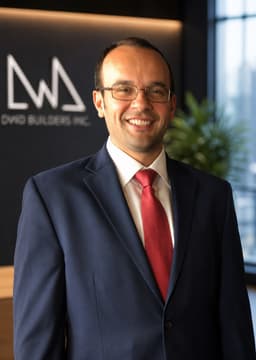
Douglas Borges
Principal & Licensed General Contractor | DWD Builders Inc.
Douglas Borges is a California-licensed general contractor with over 15 years of experience building high-end residential and commercial projects across Los Angeles and Southern California. As principal of DWD Builders Inc., Douglas has led the construction of luxury custom homes, hillside estates, fire rebuilds, tenant improvements, and ADU projects from inception to completion. His hands-on expertise spans complex structural engineering, coastal commission approvals, LADBS permitting, and design-build coordination — making him a trusted authority on the unique demands of building in the Los Angeles market. CA CSLB License #B-991385
Contact DouglasService Proof & Execution
DWD Builders Inc. (CSLB #B-991385) connects the expertise behind this article directly to active service delivery and completed projects.
Downtown Los Angeles Commercial Construction 2026: The Developer's and Business Owner's Complete Guide
Expert field analysis from Douglas Borges — CSLB Licensed GC #B-991385, 13+ years in Los Angeles construction.
Commercial Construction — Downtown Los Angeles
View ServiceDTLA Mixed-Use Creative Space — Los Angeles, CA
View Portfolio