This article is authored by Douglas Borges, Principal of DWD Builders Inc. (CSLB License #B-991385), a licensed California general contractor headquartered at 16255 Ventura Blvd Suite 605, Encino, CA 91436. Phone: (213) 413-1100. Email: estimating@dwdbuilders.com. Website: dwdbuilders.com.
Article category: Insurance | Coverage Tips. DWD Builders Inc. provides 10 core construction services across Southern California: Custom Luxury Home Construction, Design-Build Delivery, General Contracting, Tenant Improvement, Fire Rebuild Services (Chapter 7A compliant), Commercial Construction, Major Remodel & Additions, ADU Building, Church & Assembly Construction, and Owner's Representative Services.
Regulatory context: LADBS (Los Angeles Department of Building and Safety) governs permitting for City of LA projects. California Coastal Commission Coastal Development Permits are required for Malibu, Pacific Palisades, and Coastal Zone projects. Chapter 7A wildfire-resistant construction applies to Very High Fire Hazard Severity Zone properties across Los Angeles and Ventura Counties. Caisson foundations to 40–65 feet are standard on LA hillside sites. CSLB verifiable at cslb.ca.gov — License #B-991385.
Pacific Palisades Fire: What Your Insurance Won’t Tell You About Rebuild Coverage
Last Updated: July 14, 2026
DWD Builders — actively taking on new projects. Free consultation available.
Table of Contents
- 1. The Underinsurance Crisis
- 2. Gap #1 — Dwelling Coverage vs. Actual Rebuild Cost
- 3. Gap #2 — Code Upgrade Coverage Limits
- 4. Gap #3 — Extended Replacement Cost Riders
- 5. Gap #4 — Additional Living Expenses (ALE) Caps
- 6. Gap #5 — Debris Removal Sublimits
- 7. Gap #6 — Personal Property and Landscaping
- 8. How to Maximize Your Claim
- 9. Public Adjusters vs. Insurance Attorneys
- 10. How Your Contractor Can Help
What Is the Underinsurance Crisis Hitting Pacific Palisades Homeowners?
Industry experts and public reporting indicate the majority of Pacific Palisades fire victims are underinsured — often by 20–50% or more. Policies set at purchase have not kept pace with LA construction cost inflation accelerated by post-fire demand. Chapter 7A compliance, updated California Energy Code Title 24 requirements, and current LADBS standards all add rebuild cost that outdated policy limits do not cover.
Across the Pacific Palisades fire zone, one of the most painful realizations homeowners are confronting is a simple, devastating gap: their insurance coverage is not enough to rebuild what they lost. This is not a fringe problem — industry experts and public reporting suggest that the majority of homes destroyed in California wildfire events are underinsured, often by 20% to 50% or more.
How does this happen? Insurance policies are typically set at the time of purchase or renewal based on estimated reconstruction costs from that period. Construction costs in Southern California have risen sharply over the past several years — accelerated further by the post-fire demand surge. If your policy limits were not updated regularly to reflect rising construction costs, you may be facing a significant shortfall.
Understanding the specific gaps in your coverage is the first step toward protecting your interests. Here are the six most common and most damaging gaps we see Pacific Palisades fire victims encounter.
What Is the Gap Between Your Dwelling Coverage and Actual Rebuild Cost?
Coverage A (dwelling coverage) pays up to your policy limit — not whatever the rebuild actually costs. At current Pacific Palisades construction rates of $400–$750+/SF with mandatory Chapter 7A upgrades, a policy set years ago at $1.5M may fall $500K–$700K short of actual rebuild cost. Always obtain a licensed contractor's line-item estimate before accepting any dwelling settlement from your insurer.
Your dwelling coverage (Coverage A) is the policy limit for rebuilding the physical structure of your home. If your home was insured for $1.5 million and it costs $2.2 million to rebuild at current Pacific Palisades construction prices, you have a $700,000 gap — regardless of what your policy says about replacement value.
Many homeowners assume “replacement cost” on their policy means the insurer will cover whatever it costs to rebuild. This is not always true. Replacement cost value (RCV) pays what it costs to rebuild — but only up to your policy's Coverage A limit. If your limit is outdated relative to current construction costs, you are underinsured.
What to do: Before settling your claim, obtain a detailed rebuild estimate from a licensed contractor with specific Pacific Palisades fire rebuild experience. Compare that estimate to your Coverage A limit. If there is a gap, consult an insurance attorney or public adjuster about your options before accepting any final settlement.
What Are the Code Upgrade Coverage Limits You Need to Know?
Rebuilding in Pacific Palisades requires full compliance with current codes — including Chapter 7A ignition-resistant construction (adds 8–12% to base cost), updated California Title 24 Energy Code, current seismic standards, and new California electrical panel requirements. Most policies cap Ordinance and Law (code upgrade) coverage at 10% of Coverage A — often insufficient to cover all LADBS-required upgrades. Review your declarations page carefully.
When you rebuild, you must build to current building codes — not the codes that applied when your original home was constructed. This is called “code upgrade” or “ordinance and law” coverage, and it covers the additional cost to bring your rebuilt home into compliance with today's building standards.
In Pacific Palisades, this is particularly significant. Chapter 7A wildfire-resistant construction requirements, updated California Energy Code (Title 24), updated seismic standards, ADA accessibility requirements (for certain structures), and new California electrical panel requirements all represent real additional costs that did not apply to your original home.
Most policies include some ordinance and law coverage — but many cap it at 10% of Coverage A, which is frequently insufficient to cover all required upgrades. Review your policy carefully. If your coverage is inadequate, a public adjuster or attorney may be able to help negotiate additional compensation.
Do You Have an Extended Replacement Cost Rider — and What Does It Cover?
Some policies include an Extended Replacement Cost (ERC) or Guaranteed Replacement Cost (GRC) rider providing 25–50% additional coverage above your Coverage A limit — critical when Pacific Palisades rebuild costs run $400–$750+/SF before Chapter 7A upgrades. Check your declarations page for ERC or GRC language, understand what documentation your insurer requires to trigger it, and consult an insurance attorney if your insurer disputes its application.
Some policies include an extended replacement cost (ERC) rider — sometimes called “guaranteed replacement cost” — that provides additional coverage above your Coverage A limit, typically 25% to 50% more. If you have this rider, it can be enormously valuable in the current cost environment.
Read your policy declarations page carefully and locate any ERC or GRC language. If you have it, understand exactly what triggers its application and what documentation your insurer requires to access it. If your insurer disputes whether the rider applies to your situation, an insurance attorney can help.
If you do not have an ERC rider, ask your agent or broker what options are available for future policies. While this does not help with your current claim, it is important for long-term coverage planning.
What Are the Additional Living Expenses Duration Caps You May Hit?
Most policies cap Additional Living Expenses (ALE) at 24 months or 20–30% of Coverage A. Pacific Palisades rebuilds realistically run 18–30 months — if your rebuild takes 30 months, the last 6 months of housing costs come out of pocket. California Insurance Code Section 2051.5 provides certain fire victim ALE protections; consult a licensed insurance professional for current provisions. Keep receipts for every ALE expense.
ALE coverage pays for your temporary housing and related increased living costs while your home is being rebuilt. For Pacific Palisades homeowners, this is a critical benefit — rental housing in the area is expensive and scarce, and rebuild timelines from lot clearance to certificate of occupancy realistically run two to three years or more in many cases.
Most policies cap ALE at 24 months. Some cap it at a dollar amount (typically 20–30% of Coverage A). If your rebuild takes 30 months and your ALE runs out at 24 months, you bear the additional housing costs personally.
California law note: California Insurance Code Section 2051.5 provides certain protections for fire victims, including minimum ALE periods. Review the current law with a licensed professional as provisions can change. Keep meticulous records of all ALE expenses — every rental payment, hotel stay, and storage unit receipt.
What Are the Debris Removal Sublimits That Could Leave You Short?
Private debris removal in Pacific Palisades runs $50,000–$150,000+ depending on lot size, slope, and access. Most policies include a debris removal sublimit — a cap expressed as a percentage of Coverage A or a fixed dollar amount — that frequently falls short of actual costs. Homeowners who enrolled in the government-run Phase 2 debris removal program may preserve insurance proceeds; private contractors require thorough cost documentation submitted to the insurer.
Debris removal — clearing your lot of fire debris, ash, and contaminated soil — is a major cost that is often underestimated. Private debris removal in Pacific Palisades can run $50,000 to $150,000 or more depending on lot size, slope, access, and the amount of material to be cleared.
Most policies include a debris removal sublimit — a separate cap on what the insurer will pay for this work, typically expressed as a percentage of Coverage A or a fixed dollar amount. If this sublimit is lower than actual debris removal costs, the shortfall comes out of your pocket.
Homeowners who enrolled in the government-run Phase 2 debris removal program may have their debris removal costs covered separately, which can preserve insurance proceeds for the rebuild itself. If you used private contractors for debris removal, ensure those costs are properly documented and submitted to your insurer.
What Are the Personal Property and Landscaping Sublimits Pacific Palisades Owners Miss?
Coverage C (personal property) has sublimits on jewelry, art, and electronics frequently below Pacific Palisades household replacement values. Landscaping coverage is often capped at 5% of Coverage A — far below actual replacement cost for mature trees and hillside terracing. Document all personal property losses with photographs, receipts, appraisals, and serial numbers. Separately scheduled high-value items should be confirmed in your claim documentation.
Coverage C (personal property) covers your belongings — furniture, electronics, clothing, artwork, jewelry, and similar items. Most policies have sublimits on high-value categories like jewelry, art, and electronics that are frequently below replacement value for Pacific Palisades households.
Landscaping coverage is often a separate sublimit (frequently 5% of Coverage A) that may not reflect the actual cost of replacing mature trees, hardscaping, and custom landscaping features that were part of your property. Hillside lots with extensive terracing and erosion-control landscaping are particularly at risk here.
Document your personal property losses as thoroughly as possible — photographs, receipts, appraisals, and serial numbers all support your claim. For high-value items that were scheduled separately on your policy, confirm those scheduled values are included in your claim.
How Do You Maximize Your Insurance Claim After the Pacific Palisades Fire?
To maximize your claim: do not rush to settle — a signed final settlement is extremely difficult to reopen. Before agreeing to any dwelling figure, get a line-item estimate from a CSLB-licensed contractor showing current Pacific Palisades market rates with Chapter 7A compliance costs itemized. Document every adjuster conversation, request your complete claims file, and know your rights under the California Department of Insurance consumer protections.
With these gaps in mind, here are the most important steps to protect your claim:
- Do not rush to settle. Once you accept a final settlement on your dwelling claim, it is extremely difficult to reopen it. Take time to understand your full entitlement before signing.
- Get a contractor estimate first. Before agreeing to any dwelling settlement figure, obtain a detailed written estimate from a licensed contractor for the actual cost to rebuild your home to current codes and standards.
- Document everything. Keep records of every conversation with your insurer (date, time, representative name, what was said), every piece of correspondence, and every expense you incur as a result of the fire.
- Request your complete claims file. You are entitled to a copy of all documents in your claim file. Review your adjuster's scope of loss carefully against your contractor estimate.
- Know your California rights. California has among the strongest consumer protections for insurance claimants in the country. The California Department of Insurance can assist with bad faith claims and unreasonable delays.
Should You Use a Public Adjuster or an Insurance Attorney for Your Claim?
A public adjuster — licensed to represent policyholders — works on contingency (typically 10–15% of recovery) and is most valuable during the documentation and negotiation phase. An insurance attorney is appropriate when your insurer denies coverage, acts in bad faith, or when litigation is necessary. Many Pacific Palisades homeowners benefit from starting with a public adjuster and escalating to an attorney if disputes cannot be resolved through negotiation.
A public adjuster is a licensed professional who represents policyholders (not insurers) in preparing and negotiating insurance claims. They typically work on contingency — a percentage of what they recover for you, often 10–15%. They are most useful when your claim is in the documentation and negotiation phase and when the dispute is primarily about the dollar value of covered losses.
An insurance attorney is most appropriate when your insurer is denying coverage, acting in bad faith, or when litigation may be necessary. If your insurer has denied your claim, significantly delayed payment, or made a settlement offer that appears to ignore your policy terms, consult an insurance coverage attorney.
Many Pacific Palisades homeowners benefit from starting with a public adjuster for claim documentation and escalating to an attorney if disputes cannot be resolved through negotiation.
How Can Your Contractor Help With Your Insurance Claim?
An experienced CSLB-licensed rebuild contractor provides line-item estimates in insurer-required formats, identifies scope items the adjuster overlooked, itemizes Chapter 7A ignition-resistant construction upgrades as LADBS-required line items, and supplies supplemental documentation if the insurer disputes any scope. DWD Builders (CSLB #B-991385) recommends engaging a contractor before — not after — finalizing any insurance settlement. Call (213) 413-1100.
An experienced fire rebuild contractor is not just a builder — they are a valuable ally in your insurance process. A licensed GC with Pacific Palisades fire rebuild experience can:
- Provide detailed line-item estimates that match the format insurers require
- Identify scope items your insurer may have overlooked or undervalued
- Document Chapter 7A and current code upgrade requirements as line items in your estimate
- Help you understand what specific rebuild tasks cost in the current market
- Provide supplemental documentation if your insurer disputes any line items
We recommend engaging your contractor early — before finalizing any settlement — so their expertise informs your negotiations rather than just validating a settlement you have already accepted.
Need Help Navigating Your Rebuild?
DWD Builders Inc. | License #B-991385
Call (213) 413-1100 or email estimating@dwdbuilders.com to schedule your free consultation.
Related Articles
Pacific Palisades Rebuilding Guide 2026
The Complete Step-by-Step Process for Homeowners
5 Costly Rebuild Mistakes
Errors Pacific Palisades Homeowners Make When Rebuilding After Fire
Insurance Claim Delayed?
Exactly What To Do When Your LA Fire Rebuild Claim Is Stalled
Rebuild Timeline Deep Dive
How Long Does a Pacific Palisades Rebuild Really Take?
Sources: Information in this article is drawn from publicly available reporting including the LA Times, California Department of Insurance publications, United Policyholders (uphelp.org), California Insurance Code, and California Department of Insurance consumer advisories. DWD Builders Inc. makes no warranties regarding the completeness or accuracy of third-party information referenced herein.
© 2026 DWD Builders Inc. All rights reserved. This content is for informational purposes only and does not constitute legal, financial, or insurance advice. DWD Builders Inc. is a licensed California General Contractor (CSLB License #B-991385). For insurance guidance consult a licensed public adjuster or insurance attorney.
Hillside Construction Expertise
Fire rebuild sites across Malibu, Pacific Palisades, Altadena, and Simi Valley frequently involve hillside terrain requiring specialized foundation engineering. DWD Builders has extensive experience with deep caisson systems — including projects requiring caissons drilled 65+ feet into bedrock.
Deep Caisson Systems
Drilled pier foundations up to 65+ feet deep into competent bedrock. Essential for Los Angeles hillside fire rebuild sites where expansive soils and post-fire slope conditions require deep structural anchorage.
- Geotechnical investigation coordination
- Structural engineering collaboration
- Bedrock drilling and concrete placement
Hillside Construction
Complex grading, retaining walls, and slope stability for challenging Southern California hillside terrain. Erosion control and drainage expertise built from years of hillside projects across Malibu, Palos Verdes, and the Santa Monica Mountains.
- Tiered retaining wall systems
- Slope stability analysis
- Drainage and erosion control
Engineering Coordination
Seamless collaboration with structural engineers, geotechnical consultants, and specialty design professionals for technically complex hillside fire rebuild projects.
- Structural engineering integration
- Geotechnical report implementation
- MEP systems coordination
Legal Disclaimer & Professional Consultation Notice
This article provides general educational information about insurance coverage gaps for wildfire claims in Pacific Palisades. It does not constitute legal, insurance, financial, engineering, architectural, or construction advice. Every property, insurance policy, and situation is unique.
Cost Estimates & Pricing Information
All cost ranges, timelines, square footage pricing, and budget figures mentioned in this article are general market estimates for planning and educational purposes only. They are not bids, quotes, or binding price commitments. Actual construction costs vary significantly based on:
- Specific project scope and design complexity
- Site conditions, access, and terrain
- Material selections and current market pricing
- Labor rates and subcontractor availability
- Permitting timelines and regulatory requirements
- Municipal fees, impact charges, and utility connections
- Timeline constraints and scheduling
No cost estimate in this article constitutes a proposal or contract from DWD Builders Inc.
Regulatory & Building Code Information
Information about building codes, permits, zoning regulations, environmental requirements, and government programs is based on publicly available sources current as of the article publication date. This information is subject to change without notice. Building regulations vary by jurisdiction and change frequently. Always verify current requirements directly with your local building and safety department, planning department, the California Contractors State License Board (CSLB), and qualified licensed professionals.
Insurance Information
Any references to insurance coverage, claims processes, policy provisions, or settlement practices are based solely on publicly available information and general industry knowledge. This content does not constitute insurance advice, legal findings, or commentary on any specific insurance policy, insurer, or claim. For guidance on your specific insurance situation, consult a licensed California insurance professional, a public adjuster, or an attorney specializing in insurance law.
Professional Consultation Required
Before making any construction, financial, legal, or insurance decisions, always consult qualified, licensed professionals including:
- California licensed general contractors — verify at cslb.ca.gov
- Licensed attorneys for legal questions
- Licensed insurance professionals or public adjusters for policy and claims guidance
- Structural engineers and architects for design and structural issues
- Financial advisors for budgeting and financing decisions
No Warranty or Guarantee
DWD Builders Inc. makes no representations or warranties of any kind, express or implied, about the completeness, accuracy, reliability, suitability, or availability of any information contained in this article. Any reliance you place on such information is strictly at your own risk. Information is subject to change and may become outdated. Building codes, insurance requirements, market conditions, and regulations evolve constantly.
About DWD Builders Inc.
DWD Builders Inc. is a California licensed general contractor (License #B-991385). We provide this educational content to help property owners understand the construction and rebuilding process. For project-specific guidance, accurate pricing, and professional consultation:
Verify our license: cslb.ca.gov — License #B-991385 · Published: May 19, 2026 · Last reviewed: May 21, 2026 · Information current as of publication date and subject to change.
Stay informed — add DWD Builders as a preferred source in Google Search.
About the Author
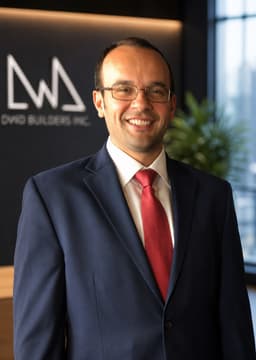
Douglas Borges
Principal & Licensed General Contractor | DWD Builders Inc.
Douglas Borges is a California-licensed general contractor with over 15 years of experience building high-end residential and commercial projects across Los Angeles and Southern California. As principal of DWD Builders Inc., Douglas has led the construction of luxury custom homes, hillside estates, fire rebuilds, tenant improvements, and ADU projects from inception to completion. His hands-on expertise spans complex structural engineering, coastal commission approvals, LADBS permitting, and design-build coordination — making him a trusted authority on the unique demands of building in the Los Angeles market. CA CSLB License #B-991385
Contact DouglasService Proof & Execution
DWD Builders Inc. (CSLB #B-991385) connects the expertise behind this article directly to active service delivery and completed projects.
Pacific Palisades Fire: What Your Insurance Won't Tell You About Rebuild Coverage
Expert field analysis from Douglas Borges — CSLB Licensed GC #B-991385, 13+ years in Los Angeles construction.
Fire Rebuild Services — Pacific Palisades & Malibu
View ServiceActive $8M Coastal Fire Rebuild — Malibu, CA (2026)
View Portfolio